Jyotish · History & Principles · 15 min read · 2026
More Than “Vedic Astrology”: What Jyotish Actually Is
Jyotish is often presented as an unchanging “Vedic astrology” supposedly preserved intact for thousands of years. Its real history is far richer: before us stands a layered Indian tradition in which Vedic calendrical astronomy, omen literature, Hellenistic horoscopic technique, mathematical computation, and ideas of karma gradually converged into one intricate system.
Written by: Anna Svitla
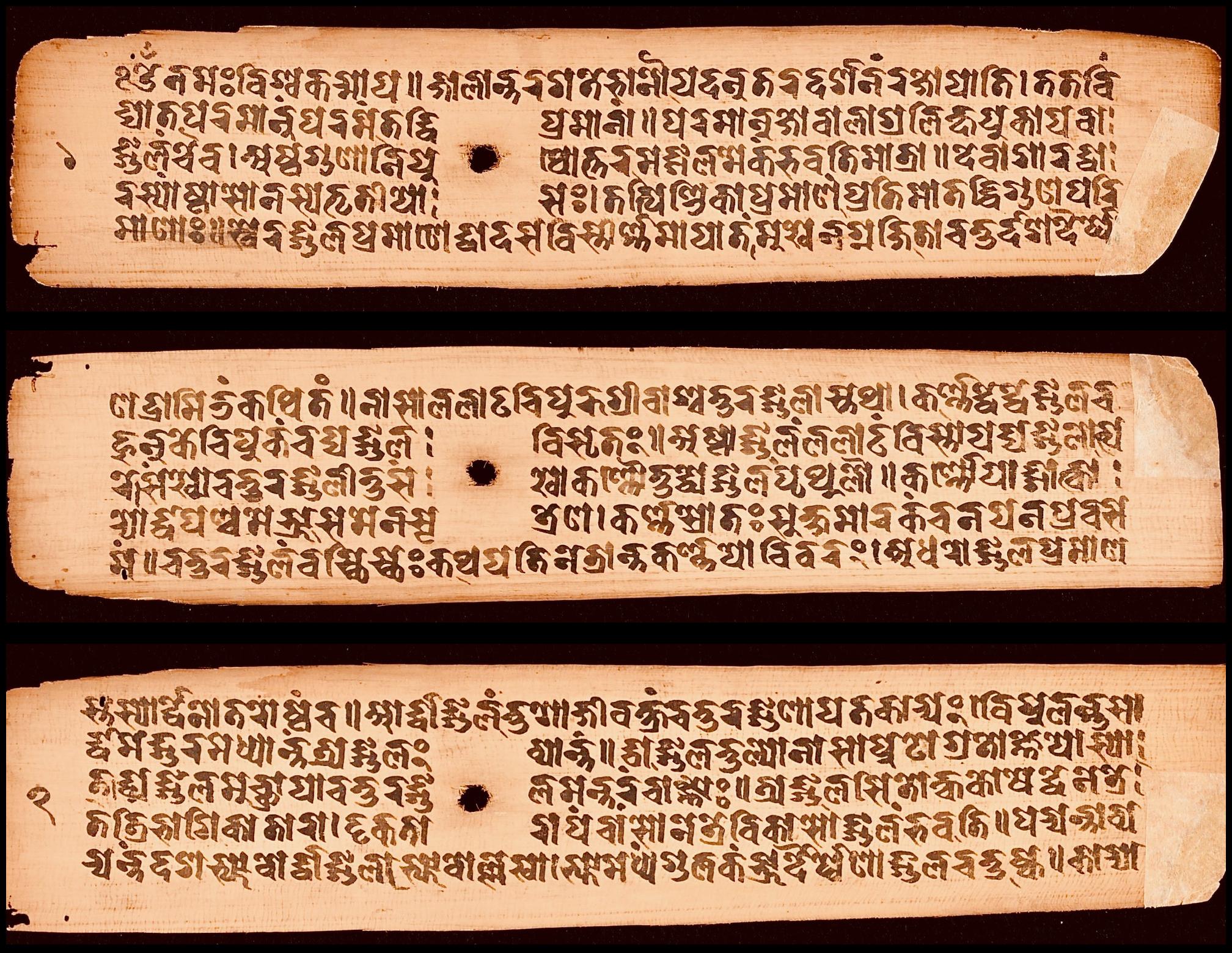
If someone who has considered themselves an Aries their entire life commissions a Jyotish birth chart, they may suddenly turn out to be a Pisces. That is neither a calculator glitch nor “a different name for the same sign.” Most modern Indian astrologers measure the zodiac relative to fixed stars — sidereally — whereas Western astrology anchors it to the vernal equinox. Due to the precession of Earth’s axis, the two systems have drifted roughly 24° apart today. Yet that discrepancy is only the surface of a far more compelling story: Jyotish began not as a ready-made “fortune-telling system,” but as a discipline for timing sacred ritual by watching the Sun, Moon, and starlight.[14]
01
From “Light” to a Science of Time
Sanskrit jyotis means “light,” “radiance,” and, in the plural, heavenly bodies; the cognate jyautiṣa/jyotiṣa came to name the discipline concerned with celestial motion. Thus the popular translation of Jyotish as “the science of light” is evocative, if somewhat poeticized: historically, it is more accurate to speak of “knowledge of the luminaries” or the study of their movements and the cycles of time tied to them.[6]
Within Vedic culture, Jyotiṣa became one of the six Vedāṅgas — the “limbs of the Veda,” auxiliary disciplines required to preserve and enact sacred texts accurately. Alongside it stood śikṣā (phonetics), chandas (meter), vyākaraṇa (grammar), nirukta (etymology), and kalpa (ritual procedure). A traditional metaphor calls Jyotish “the eye of the Veda” — not because it predicts personal destinies, but because it establishes when ritual ought to be performed.[1][6]
The oldest specialized text here is the Vedāṅga Jyotiṣa, traditionally attributed to Lagadha and preserved in two closely related recensions linked to the Ṛgveda and Yajurveda. It is a remarkably terse treatise on calendrical reckoning: lunar months, seasons, solstices, tithis (lunar days), and nakṣatras — stellar segments used to track the Moon’s path. It contains nothing a modern reader would recognize as natal astrology: no twelve-house horoscopes and no planets cast into zodiac signs.[1][8]
Dating the Vedāṅga Jyotiṣa remains a matter of scholarly debate. While its astronomical parameters have sometimes been cited to argue for very early dates, historians distinguish between archaic calendrical observations and the date of the surviving compilation. Claims that “modern Jyotish has remained unchanged since the Vedas” are therefore historically inaccurate: the Vedic stratum contributed calendars, nakṣatras, and ritual timekeeping, whereas classical horoscopy emerged centuries later.[1][9]
The nakṣatras illustrate both continuity and transformation vividly. Vedic texts already name a sequence of 27 — occasionally 28 — asterisms; later mathematical practice divides the ecliptic into 27 equal sectors of 13°20′ each. The Moon traverses roughly one such segment every day, making the framework equally suited to calendars and symbolic interpretation.[11]
This union of astronomy, calendar making, and religion was hardly unique to India. Across ancient civilizations, precise sky-watching flourished precisely because celestial cycles anchored calendars, ritual, and divination. In India, however, that alliance proved exceptionally enduring: even the official modern Rāṣṭrīya Pañcāṅg — India’s National Panchang — publishes astronomically computed tithis, nakṣatras, and eclipse timings calculated with contemporary mathematical astronomy. Following the Calendar Reform Committee’s work in the 1950s, the state sought to unify dozens of regional calendars on rigorous astronomical footing.[14]
02
When India Encountered the Greek Horoscope
The most crucial historical corrective to the popular image of “purely Vedic astrology” is that classical Indian horoscopy emerged through cross-cultural exchange. Long before contact with the Hellenistic Mediterranean, India possessed nakṣatras, calendrical astronomy, omen traditions, and forms of astral divination. Yet the natal chart divided into twelve signs and twelve houses with planets positioned for the moment of birth belongs to a distinct later stratum, shaped under strong Greco-Babylonian influence during the early centuries of the Common Era.[8][9]
A pivotal witness is the Yavanajātaka, literally “The Horoscopy of the Yavanas,” where yavana originally denoted Ionians or Greeks. Attributed to Sphujidhvaja, this Sanskrit treatise systematizes horoscopic astrology. David Pingree’s studies made it a cornerstone for tracing Hellenistic astrology’s transmission to India, though newer textual scholarship by Bill Mak has shown that several of Pingree’s specific reconstructions — including exact dates and assumptions of a direct Greek original — require revision. Thus the broad reality of cultural exchange is solidly established, while specific philological details remain under active debate.[4][7]
Traces of Greek contact persist directly in Sanskrit vocabulary. The term horā, which came to designate horoscopic astrology, is widely linked to Greek hōra; drekkāṇa to dekanos; and kendra to kentron. Borrowing terminology did not make Indian astrology a mere copy, however: Indian scholars rapidly integrated imported techniques into indigenous calendars, nakṣatras, cosmology, and karmic ethics.[6][8]
This synthetic intellect shines clearly in the sixth-century scholar Varāhamihira, associated with the Ujjain region. His Pañcasiddhāntikā preserves summaries of five astronomical traditions — Paitāmaha, Vāsiṣṭha, Romaka, Pauliśa, and Saura. The very names Romaka (“Roman”) and Pauliśa reflect a scholarly world actively engaging Mediterranean science.[3][10]
His Bṛhat Jātaka became a foundational classic of natal astrology, while the encyclopedic Bṛhat Saṃhitā reads like a vast compendium of celestial and terrestrial omens — spanning planets and comets alongside meteorology, architecture, groundwater, agriculture, gemstones, and civic affairs. Historians of science therefore read Varāhamihira not merely as an astrologer, but as evidence of how porous the boundary between “astronomy,” “astrology,” natural philosophy, and divination remained in early medieval India.[2][3][10]
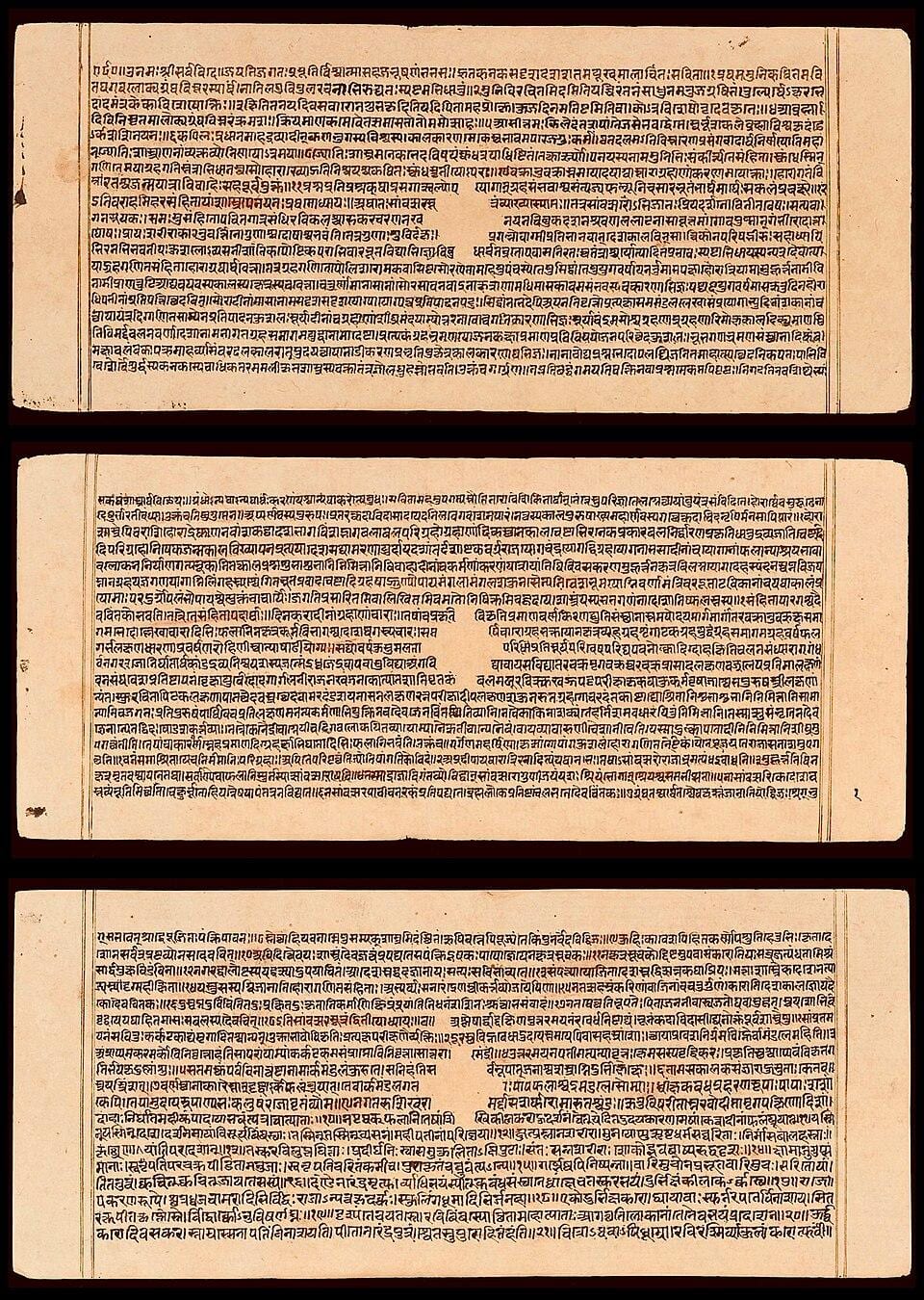
Particular historical caution applies to the Bṛhat Parāśara Horā Śāstra — arguably the single most influential manual across modern Jyotish schools. Tradition attributes it to the sage Parāśara, yet that does not mean today’s printed text originated in the Vedic period. While Varāhamihira knew an early Parāśara Horā and medieval writers cited Parāśarian teachings, the extant text is philologically complex: its core strata belong to the early medieval period, overlaid with later additions. It is more accurate to regard it not as an untouched ancient textbook, but as a living tradition compiled and edited across centuries.[5]
03
How a Jyotish Chart Is Read
In classical Jyotish terminology, a celestial agent is not simply a planet. The key word graha derives from the root meaning “to grasp or seize.” Modern tradition recognizes nine grahas: the Sun (Sūrya), Moon (Candra), Mars (Maṅgala), Mercury (Budha), Jupiter (Guru/Bṛhaspati), Venus (Śukra), Saturn (Śani), together with Rāhu and Ketu. The latter two are not physical planets; astronomically they are the ascending and descending lunar nodes where the Moon’s orbital plane crosses the ecliptic — the exact zones where eclipses occur. Astrology personifies these mathematical points and assigns them symbolic weight.[12][15]
A natal chart uses twelve rāśis (zodiac signs) running from Meṣa (Aries) to Mīna (Pisces). Sign and house are distinct: a bhāva (house) signifies an arena of life — the first tied to body and selfhood, the seventh to partnerships, the tenth to vocation and public standing. Although schools differ on house-cusp calculations, popular Indian practice frequently maps each whole sign cleanly to a house starting from the ascendant.[5]
The third coordinate layer consists of the 27 nakṣatras. Whereas twelve signs divide the ecliptic into 30° sectors, nakṣatras carve it into finer 13°20′ divisions. The Moon’s birth nakṣatra holds special importance, setting the starting point for planetary timing cycles in several traditions.[11]
Casting a chart requires birth date, accurate birth time, and birthplace. Place provides geographic coordinates; time determines the local horizon and ascendant (the sign rising in the east). Because the ascendant shifts roughly every two hours — at a pace varying with latitude — even small timing errors can alter houses or, near a boundary, flip the rising sign itself. When exact birth times are missing, some practitioners attempt “rectification” via biographical milestones, though this remains an astrological technique rather than an independently validated scientific procedure.
One chart rarely suffices in classical interpretation. Jyotish employs vargas — harmonic or divisional charts that subdivide each sign and project planetary longitudes into specialized secondary diagrams. Most famous is the navāṃśa (D9), dividing every sign into nine parts to refine planetary strength and relationship themes; the daśāṃśa (D10) addresses career and public work. These represent mathematical subdivisions of a planet’s longitude rather than additional celestial bodies.
Another signature mechanism is the daśā (“period” or “condition”). Under the widely used Vimśottarī daśā system, a full 120-year human timeline unfolds across sequential planetary periods ruled by the nine grahas, calibrated from the Moon’s natal nakṣatra and nested with sub-periods. Together with current planetary transits, daśās mark one of the sharpest technical distinctions between Jyotish and modern Western astrology — a methodology heavily codified in Parāśarian texts.[5]
Alongside daśās operate gochara (planetary transits across the natal map) and yoga (literally “union”): specific alignments of planets, signs, rulers, and houses credited with distinct outcomes. In this context, yoga has nothing to do with physical postures or meditation; it is a technical term for an astrological configuration.
From these foundations grow several major branches of practice: jātaka (natal interpretation), muhūrta (electing auspicious moments for weddings, travel, or construction), praśna (horary charts cast for the moment a question is asked), and saṃhitā (mundane omens encompassing weather, harvests, and collective affairs). Historical sources amply document the use of muhūrta across ritual, marriage, commerce, journeys, and architecture.[12]
04
Why Your Zodiac Sign Can “Change”
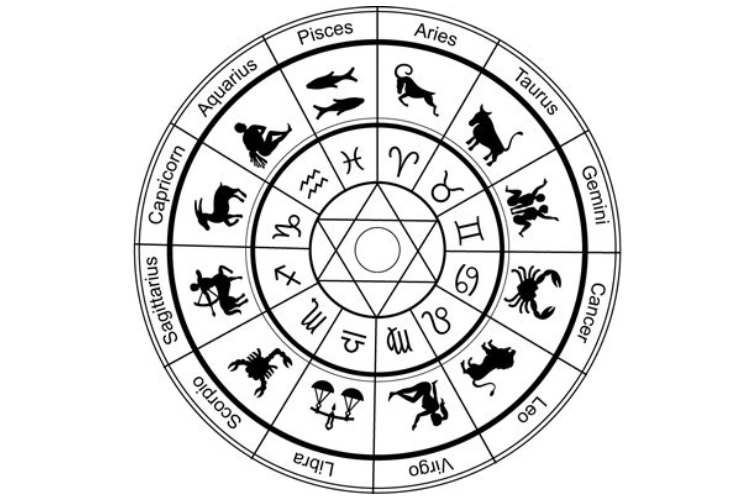
The single most visible difference between Western and Indian astrology lies in how each anchors 0° of the zodiac.
In the tropical zodiac, dominant across modern Western astrology, 0° Aries is permanently pegged to the vernal equinox — aligning the zodiac with Earth’s seasonal cycle rather than fixed constellations.
In the sidereal zodiac, the zero point is fixed against stellar background coordinates. Because of the precession of the equinoxes, Earth’s rotational axis slowly wobbles, shifting the vernal equinox backward against the stars by about 1° every 71–72 years. The angular gap between tropical and sidereal longitudes is called ayanāṃśa.[14]
Here another subtlety arises: no single ayanāṃśa is universally accepted by every practitioner of Jyotish. The most widely used standard in India is the Lahiri / Chitrapaksha ayanāṃśa, associated with India’s Calendar Reform Committee of the 1950s — standardized first to unify civil and religious calendars rather than to “prove” astrological claims.[14]
Consequently, someone born with a tropical Sun at 10° Aries will have a Lahiri sidereal Sun roughly in mid-Pisces, whereas a person born near the very end of tropical Aries may remain an Aries in Jyotish too. Saying “every sign shifts back by one in Vedic astrology” is only a rough rule of thumb.
Jyotish vs. Modern Western Astrology
| Dimension | Jyotish | Typical Modern Western Astrology |
|---|---|---|
| Zodiac | Predominantly sidereal | Predominantly tropical |
| Zero point | Anchored to stellar reference via ayanāṃśa | Vernal equinox |
| Nakṣatras | Central structural layer | Typically unused |
| Lunar nodes | Rāhu and Ketu function as full grahas | Used, though rarely weighted like planets |
| Timing periods (Daśās) | Core predictive framework | No direct equivalent |
| Divisional charts | Used systematically (vargas) | Rarely or never used |
| Aspects | Depend heavily on planet type and school | Primarily angular separations between planets |
| Electional branch | Muhūrta | Electional astrology |
| Horary branch | Praśna | Horary astrology |
| Philosophical context | Karma, dharma, religious and ritual life | Often psychological or eclectic esotericism |
| Historical roots | Vedic calendrical lore + Indian omen traditions + Hellenistic horoscopy | Babylonian & Hellenistic astrology via Greco-Roman, Arabic, and European lineages |
These two traditions are therefore not entirely separate civilizational inventions. Both inherit deeply from Hellenistic horoscopy while evolving within distinct cultural worlds — which is why Mars, Venus, twelve signs, and houses feel immediately familiar alongside distinctively Indian nakṣatras, daśās, Rāhu-Ketu, and varga charts.[8][9]
05
Karma, Fate, and Room for Choice
The deepest divide between Jyotish and magazine horoscopes opens where the chart ceases to be a checklist of “personality traits” and enters Indian reflection on karma and dharma.
In classical Indian philosophy, karma denotes causally consequential action and its fruition rather than pop clichés of “cosmic payback.” Dharma is subtler still, shifting across contexts between moral order, duty, ethical conduct, religious observance, or social role. Historically, Jyotish sat inside this ethical cosmos, treating a birth chart as a map of conditions under which accumulated causality unfolds.
Yet simple fatalism never followed automatically. Across centuries, Indian astrological culture paired diagnosis with agency: if the future were locked in stone, choosing an auspicious muhūrta, performing śānti rites, charity, or prayer would have no purpose. Historically, Jyotish lives inside a tension between two intuitions — life presents inherited conditions, yet human beings choose how to respond.
From that tension arise upāyas — remedial measures ranging in different communities from mantras, deity worship, charitable giving, and pūjā to temple visits, fasting, or gemstones. Anthropological fieldwork demonstrates that Indian astrological consultations rarely end with prediction alone; clients commonly leave with a ritual or ethical course of action.[12][15]
Understanding the status of such remedies matters. A ritual may carry profound religious, familial, psychological, or symbolic meaning without constituting a medically or physically verified mechanism for altering planetary influence. Claims that gemstones cure illness or astrologically neutralize medical risk should be viewed with caution: there is no scientific basis for substituting them for clinical care.
A modern Jyotish session typically opens with birth date, time, and location, before analyzing the ascendant, Moon, grahas, houses, nakṣatras, daśās, and transits. Ethnographic fieldwork in Benares shows clients arriving with thoroughly modern questions — promotions, children’s education, relocation, marriage, business decisions. Jyotish endured not because India stayed frozen in antiquity, but because its practitioners translated an ancient grammar of fate into the realities of contemporary urban life.[12]
06
Myths, Controversies, and the Modern Life of Jyotish
Myth 1: “Jyotish appears in its modern form inside the Vedas.” It does not. Vedic tradition contributed calendrical astronomy, nakṣatras, ritual timekeeping, and astral symbolism, whereas twelve-sign natal horoscopy with houses developed later, largely through contact with the Hellenistic world.[1][9]
Myth 2: “Western astrology looks only at Sun signs, while Vedic reads the whole chart.” Serious Western natal astrology weighs planets, ascendant, and houses just as thoroughly; Sun-sign columns were a twentieth-century newspaper simplification. The genuine difference lies in coordinate systems, timing techniques, nakṣatras, daśās, vargas, and cultural context.
Myth 3: “Rāhu and Ketu are mysterious hidden planets unknown to ancient Greece.” Physically they are orbital nodes rather than planets, playing an entirely real astronomical role in eclipses; treating them as personified grahas belongs to astrology and myth.
Myth 4: “The sidereal zodiac is astronomically accurate, making Jyotish more scientific.” Sidereal coordinates accurately map stellar positions, just as tropical coordinates accurately measure seasonal equinoctial angles. Coordinate precision alone never proves the astrological claim that celestial geometry determines personality or fate.
Here lies the boundary between cultural history and empirical science. The astronomical core of Jyotish — computing planetary longitudes, eclipses, lunar phases, and calendars — belongs to the history of exact sciences. Linking those positions to personality or future events is a separate hypothesis. Controlled studies have not supplied reliable evidence that natal charts describe character above chance levels; Shawn Carlson’s famous 1985 double-blind test published in Nature failed to confirm astrologers’ claimed ability to match charts with psychological profiles.[16][17][18]
None of this makes Jyotish culturally trivial. Quite the reverse: it matters deeply as a lens on how societies build bridges between mathematics, religion, uncertainty, and personal agency.
In India the tradition remains vital enough to spark legal and academic debate. In 2001, the University Grants Commission endorsed university departments of Jyotir Vigyan, prompting scientists to challenge the move on grounds that astrology’s predictive claims lack scientific validation. In 2004, the Supreme Court of India declined to interfere with the UGC’s curricular authority without affirming empirical validity for astrological forecasting.[13]
History also holds a quiet paradox. We often assume astronomy and astrology were eternal adversaries, yet across antiquity they grew side by side. Demand for sharper planetary tables propelled mathematical astronomy forward, even as sharper science later separated physical cosmology from symbolic interpretation. India’s textual heritage preserves vivid traces of an era before those boundaries hardened.[8][10]
Perhaps the richest way into Jyotish, then, is not asking “does Saturn truly bring hardship?”, but another question: what happens when human beings turn the night sky into a language for speaking about time, necessity, and choice? Across millennia — from a Vedic priest timing an offering by the Moon to a modern client weighing a career pivot — texts and calculations have evolved dramatically. What has scarcely changed is the human desire to bring coherence to uncertainty.
For readers curious to see how this architecture operates on a concrete birth chart — through nakṣatras, houses, daśās, vargas, and their interplay — an individual Jyotish consultation with Anna Svitla offers a grounded way to encounter the tradition firsthand rather than as dry terminology. Keep one clear boundary in mind: astrological reflection can sharpen personal perspective, but never replaces medical, legal, financial, or clinical expertise.
Want to explore your natal chart in Jyotish without fatalism?
Sources & Further Reading
- [1]T. S. Kuppanna Sastry, Vedāṅga Jyotiṣa of Lagadha, ed. K. V. Sarma, Indian National Science Academy, 1985 — PDF / edition.
- [2]Varāhamihira, The Brihat Jataka, trans. N. Chidambaram Iyer, 1885 — Wellcome Collection (Public Domain Mark).
- [3]Varāhamihira, Bṛhat Saṃhitā, English edition by V. S. Sastri, 1946; bibliography and early editions surveyed in academic reference works on Varāhamihira.
- [4]David Pingree, The Yavanajātaka of Sphujidhvaja, Harvard University Press, 1978 — scholarly critical edition.
- [5]Bṛhat Parāśara Horā Śāstra — attributed by tradition to Parāśara; modern editions must be read in light of textual debates over strata, authorship, and dating.
- [6]David Pingree, Jyotiḥśāstra: Astral and Mathematical Literature, Harrassowitz, 1981 — Wellcome Collection bibliographic record.
- [7]Bill M. Mak, “The Date and Nature of Sphujidhvaja’s Yavanajātaka Reconsidered…”, History of Science in South Asia 1, 2013 — DOI / open access.
- [8]Audrius Beinorius, “The Followers of the Stars: On the Early Sources and Historical Development of Indian Astrology”, Acta Orientalia Vilnensia — Article.
- [9]Michio Yano, “Science and Religion in Ancient India” — academic survey of Indian astronomy, religion, and Hellenistic exchange.
- [10]Complete Dictionary of Scientific Biography: “Varāhamihira” — overview of life, Pañcasiddhāntikā, Bṛhat Jātaka, and Bṛhat Saṃhitā.
- [11]A. K. Chakravarty, “The Asterisms”, IAU Colloquium: History of Oriental Astronomy — scholarly overview of the 27 nakṣatras.
- [12]Caterina Guenzi, Words of Destiny: Practicing Astrology in North India, SUNY Press — ethnography of contemporary astrological practice in Benares.
- [13]Supreme Court of India, P. M. Bhargava & Ors vs University Grants Commission & Anr, 5 May 2004 — Judgment text.
- [14]India Meteorological Department, Annual Report 2025 — history of the Calendar Reform Committee and Rāṣṭrīya Pañcāṅg.
- [15]Lilan Laishley, “South Indian Ritual Dispels Negative Karma in the Birth Chart”, Culture and Cosmos — study of upāya remedies and consultation practice.
- [16]
- [17]I. W. Kelly, “Astrology and Science: A Critical Examination”, Perceptual and Motor Skills, 1979 — review of empirical tests of astrology.
- [18]OpenStax, Astronomy 2e, “Astrology and Astronomy” — overview distinguishing modern astronomy from astrology.